The average cost of dental implants in Mexico typically ranges from $750 to $800 USD per implant. Dental implants are considered a long-term solution for missing teeth, offering both functional and aesthetic benefits.
Dental implants in Mexico are a cost-effective option for those seeking high-quality dental tourism at a lower price than in many other countries.
The average cost of dental implants in Mexico typically ranges from $750 to $800 USD per implant, which is about 70% cheapest than the $3,000 to $4,500 USD you might pay in the USA.
Despite the lower cost, many dental clinics in Mexico offer state-of-the-art technology and experienced professionals, ensuring that patients receive excellent care.
The cost of 4-on-1 dental implants in Mexico typically ranges from $5,680 to $13,570 USD per arch, with variations based on factors like clinic location, dentist experience, implant type, and additional procedures, making it a potentially more affordable option for patients.
All You Need to Know About Dental Implants in Mexico
1. What are dental implants?
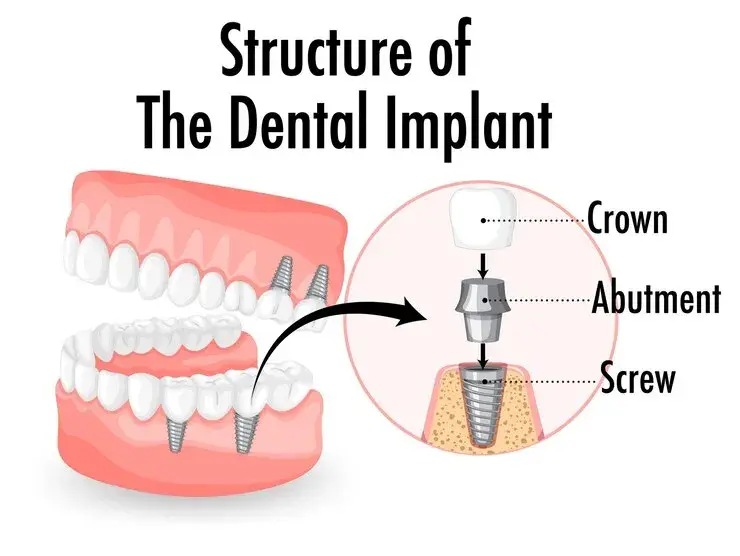
Dental implants are artificial tooth roots, typically made from titanium, surgically implanted into the jawbone.
They serve as a foundation for fixed or removable replacement teeth that match your natural teeth.
The implant integrates with the jawbone over time, providing a stable and durable support for the artificial teeth.
Dental implants are considered a long-term solution for missing teeth, offering both functional and aesthetic benefits.
Before and After
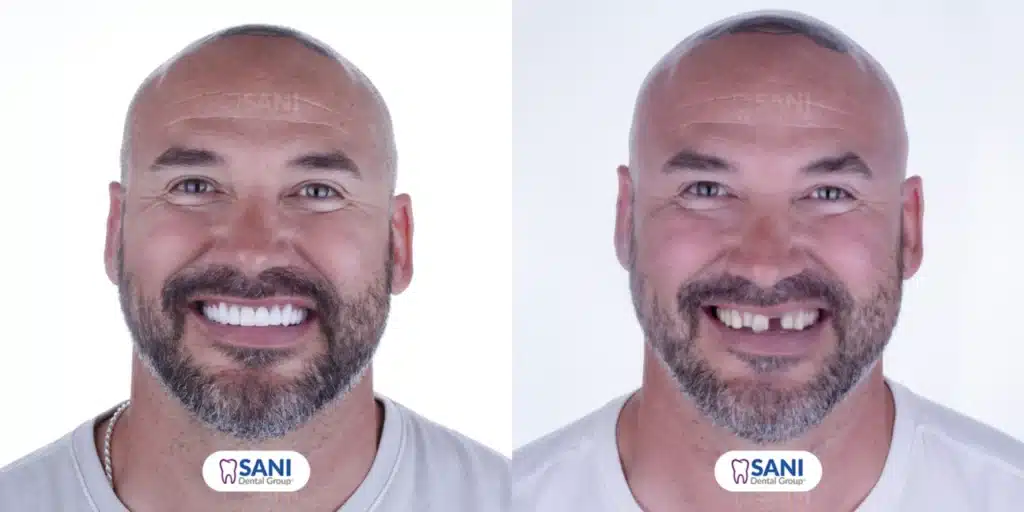
Before and After Dental Implants in Mexico
Take a look at the impressive before and after results of dental implants in Mexico.



Reviews
Dental Implants in Mexico Reviews
[grw id=8297]
Mexico is the most common destination for US patients who travel for dental implants. The cost gap is real. So are the risks most marketing pages won’t mention: no unified complication-handling system if something goes wrong after you fly home, wide variation in clinic quality even within the same town, and a regulatory environment that works differently from the US.
This guide covers what a dental implant actually is, what Mexican clinics typically charge, how Mexico’s dental regulator COFEPRIS fits in, how to check a dentist’s license yourself, the specific risks peer-reviewed literature has documented, and the cases where traveling for this treatment is a bad idea.
Dental implants are an FDA-regulated Class II medical device in the United States — the agency publishes a consumer guide on dental implants that’s worth reading before any procedure, domestic or abroad. In Mexico, dental practice is regulated at the federal level by the Secretaría de Salud and, for facility registration, by COFEPRIS (Comisión Federal para la Protección contra Riesgos Sanitarios). Neither regulator can help you if your implant fails after you return home. That reality shapes every recommendation below.
Universal Medical Travel is a medical travel facilitator. We help patients find and vet clinics. We do not provide medical care, and nothing in this article is medical advice. Read Section 7 before you act on anything here.
What a Dental Implant Is (Briefly)
A dental implant is a titanium or zirconia post surgically placed into the jawbone to replace a tooth root. Over 3 to 6 months, the bone grows around the post in a process called osseointegration. Once integrated, an abutment and a crown are attached on top.
An implant is not a single appointment. It is a staged surgical treatment typically spanning three to nine months, depending on whether bone grafting, sinus lifts, or extractions are needed first. Immediate-load implants (crown placed the same day) exist but are appropriate for a narrower set of patients than marketing copy suggests.
What the Data Shows on Cost
The honest price picture
Published US prices for a single implant (post, abutment, and crown together) typically fall between $3,000 and $6,000 based on industry fee surveys. Published Mexican prices for the same three components typically fall in the $1,400–$2,800 range when you combine the post, abutment, and crown — not $750, which is the post-only figure that marketing pages often quote as the full implant price.
Contrarian point worth knowing: The single biggest reason Mexican dental implants cost less is not lower quality materials. Major clinics in Los Algodones and Tijuana often use the same Straumann, Nobel Biocare, and BioHorizons implant systems used in US practices. The cost gap comes from labor, malpractice insurance, facility overhead, and dental school debt load — not the titanium in your jaw.
Typical price ranges at Mexican clinics
As of April 2026, the table below reflects ranges commonly advertised by Mexican dental clinics marketing to international patients. Every single figure must be confirmed in writing, dated, and itemized before you wire any money.
| Procedure | Typical range in Mexico (USD) | What’s often not included |
|---|---|---|
| Single implant (post only) | $750 – $1,200 | Abutment, crown, imaging, extraction |
| Single implant, full restoration (post + abutment + crown) | $1,400 – $2,800 | Bone graft, sinus lift, sedation |
| Bone graft (per site) | $300 – $800 | Graft material type may affect price |
| Sinus lift | $600 – $1,500 | Often billed separately |
| All-on-4 (per arch, acrylic provisional) | $6,000 – $12,000 | Final zirconia bridge, travel |
| All-on-4 (per arch, final zirconia) | $9,000 – $15,000 | Second trip for final fitting |
| All-on-6 (per arch) | $10,000 – $17,000 | Final prosthesis material varies |
| Zygomatic implants (per arch) | $12,000 – $22,000 | Specialist-only; fewer clinics offer |
Ranges compiled from publicly advertised clinic pricing reviewed as of April 2026. Quotes are not prices. Confirm directly with the specific clinic before booking.
What moves the price
Five factors explain most of the variation in what two patients pay for the same nominal procedure at the same clinic:
- Implant brand. Premium brands (Straumann, Nobel Biocare) cost more than value brands (MIS, Alpha-Bio). Both categories have peer-reviewed long-term data, but survival data is more robust for premium brands.
- Prosthetic material. Acrylic provisionals are cheaper than milled zirconia finals by a factor of two to three.
- Pre-implant work. Extractions, bone grafts, and sinus lifts add $300 to $3,000 depending on scope.
- Imaging and anesthesia. CBCT scans, IV sedation, and general anesthesia are often quoted separately.
- Number of trips. Most full-arch cases require two visits: one for surgery and healing-abutment placement, one three to six months later for the final prosthesis.
What a realistic total-cost estimate includes
A clinic quote is not your total cost. A realistic budget for a single-arch All-on-4 case includes: the procedure ($8,000–$12,000), two round-trip flights ($400–$1,200), lodging for 7–10 total nights across two trips ($500–$2,000), ground transport, meals, medications, and a contingency of at least 15% for unplanned work (additional grafting, replacement parts, complication follow-up). A realistic all-in budget for a single-arch All-on-4 from a US origin is typically $10,000 to $16,000 — not the $6,000 headline figure.
Country and Clinic-Specific Details for Mexico
Where Mexican dental-travel clinics concentrate
Four clusters handle the majority of US and Canadian dental travel volume: Los Algodones (Baja California, directly across from Yuma, Arizona — walkable border crossing), Tijuana (Baja California, across from San Diego), Cancún (Quintana Roo, flight destination), and Mérida (Yucatán). Los Algodones has the highest concentration of dental clinics per capita of any town in the world, sometimes called “Molar City” in English-language media. This density is a convenience for comparison shopping but is not itself a quality signal.
Regulatory reality in Mexico
- COFEPRIS (Comisión Federal para la Protección contra Riesgos Sanitarios) is Mexico’s federal health-risk regulator. Dental clinics operating as health establishments are required to file the Aviso de Funcionamiento y de Responsable Sanitario (procedure code COFEPRIS-05-036). Mexico is now transitioning these filings to an online platform called DIGIPRiS. Ask the clinic to show you their filing receipt and written down the name and Cédula of the Responsable Sanitario.
- Secretaría de Salud (state-level) handles sanitary licensing and inspections of dental facilities.
- Cédula Profesional is the professional license number every licensed dentist in Mexico must hold, issued by the Dirección General de Profesiones within the Secretaría de Educación Pública (SEP). You can search it for free in the public registry at cedulaprofesional.sep.gob.mx. If the dentist cannot provide a Cédula Profesional number, walk away.
- Specialist certifications — an implantologist should additionally hold a specialty Cédula in oral surgery, periodontology, or prosthodontics, typically from UNAM, La Salle, Tec de Monterrey, or another accredited Mexican dental school followed by a certified residency.
- ADM (Asociación Dental Mexicana) is the Mexican Dental Association. Membership is voluntary but is a reasonable signal of professional engagement. ADM does not publish a publicly searchable member directory; you will need to ask the clinic for their ADM membership number and, if it matters to you, confirm it by contacting ADM directly.
Accreditation claims worth understanding
Some Mexican dental clinics advertise JCI accreditation (Joint Commission International). JCI accreditation of a dental-only outpatient clinic is unusual — JCI primarily accredits hospitals. If a clinic claims JCI accreditation, ask which specific facility is accredited and check the Joint Commission International public directory directly.
Other accreditations you may see: ISO 9001 (quality management — process-focused, not clinical-outcome-focused), Consejo Mexicano de Implantología Oral, and various brand-specific certifications (e.g., “Straumann certified”). A brand certification means the dentist completed the manufacturer’s training. It is not equivalent to a specialty license.
Entry requirements for US and Canadian citizens
Per the US State Department’s Mexico Travel Advisory, US citizens do not need a tourist visa for stays under 180 days, but every traveler must have a valid passport and obtain a Forma Migratoria Múltiple (FMM). Travelers flying in receive a digital FMM (FMMD) at international airports; land crossers still complete the traditional FMM online or at the border. Bring: passport, printed clinic appointment confirmation, proof of lodging, and a return ticket. For ground crossings at Los Algodones, the border crossing is pedestrian; parking is on the US side in Yuma.
It’s worth reviewing the current advisory level for your specific destination state — several Mexican states carry elevated State Department advisory levels that are updated periodically.
Language support — what actually matters
“English-speaking staff” in clinic marketing can mean anything from a fluent bilingual treating dentist to a single English-speaking receptionist. The question that matters: who translates during the informed-consent conversation and surgical planning? If the treating surgeon does not speak English fluently, you need either a professional medical interpreter or written consent documents in English that you read before signing. Translation by a clinic assistant during consent is not acceptable.
Follow-up care — the under-discussed risk
Implants take 3–6 months to osseointegrate. Complications can emerge months or years later: peri-implantitis, screw loosening, crown fracture, abutment failure. The ADA’s guidance on dental tourism is explicit on this point — the Association recommends arranging follow-up care with a home-country dentist before travel to ensure continuity of care, and confirming with your insurer whether any follow-up treatment will be covered.
If you live in the US and your implant was placed in Mexico, you have three realistic options when a problem appears:
- Fly back to the original clinic (cost of a ticket plus lost time).
- Find a US dentist willing to service another dentist’s work (many decline; those that accept typically charge a premium and may not have access to the same implant system’s parts).
- Accept explantation and restart.
This is the single most important planning question most articles skip. Before you book, identify a US-based dentist who will see you for follow-up and ask them specifically whether they will service the implant system your Mexican clinic uses.
Risks and Red Flags
Documented medical complications
Dental implant surgery carries specific, documented complications that no marketing page should gloss over:
- Peri-implantitis — inflammatory disease of the tissues around the implant, which can progress to bone loss and implant failure. A 2022 systematic review and meta-analysis in BMC Oral Health found an overall peri-implantitis prevalence of roughly 19.5% at the patient level and 12.5% at the implant level. A more recent AO/AAP systematic review in the Journal of Periodontology (Galarraga-Vinueza et al., 2025) concluded that roughly one in five patients will develop peri-implantitis over a 20-year follow-up.
- Implant failure / lack of osseointegration — reported rates vary by population and study design. The Howe, Keys & Richards 2019 meta-analysis in the Journal of Dentistry summarized 10-year implant survival at 96.4% (CI 95.2–97.5%), with a sensitivity analysis adjusting for missing data giving 93.2%. A 20-year meta-analysis by Kupka et al., 2024 in Clinical Oral Investigations reported survival of roughly 92% in prospective studies and 88% in retrospective studies — not the 98–99% often claimed in clinic marketing.
- Nerve injury — inferior alveolar nerve injury during lower-jaw implant placement can cause persistent numbness or altered sensation in the lip and chin. The Juodzbalys, Wang & Sabalys 2011 literature review in the Journal of Oral & Maxillofacial Research noted reported IAN injury incidence ranging from 0% to 40% depending on surgical technique and proximity to the mandibular canal; a 2025 systematic review and meta-analysis (Pérez-Castillo et al.) found that implants placed less than 1 mm from the mandibular canal carried a 68% incidence of neurosensory alteration, while implants 2 mm or more away carried essentially 0% incidence — underscoring how much surgical planning and CBCT imaging matter.
- Sinus perforation — upper-jaw implants placed near the maxillary sinus can cause sinus perforation, infection, or displaced implants. The FDA’s consumer guide lists sinus issues among recognized dental implant complications.
- Infection — post-surgical infection, particularly with inadequate antibiotic prophylaxis or poor post-op hygiene.
- Smoker-specific elevated failure risk — smoking roughly doubles implant failure risk across the literature. A 2022 meta-analysis of 292 studies in Medicina analyzing over 150,000 implants reported an odds ratio of 2.40 for failure in smokers versus non-smokers. A 2020 meta-analysis by Naseri et al. in Journal of Prosthodontic Research found that patients smoking more than 20 cigarettes per day had a relative risk of failure 2.45 times that of non-smokers at the implant level. If you smoke, this is not optional information — discuss quitting with the surgeon before committing.
Warning signs of a clinic you should not use
- Quotes a total price without an itemized written treatment plan.
- Cannot or will not provide the treating dentist’s Cédula Profesional number in writing.
- Cash-only or crypto-only payment policy with no invoice.
- Pressures you to commit during the first consultation or offers a same-day discount for deposit.
- Promises a specific result (“100% success,” “guaranteed bite”) rather than probabilities.
- Will not discuss complication rates or what happens if the implant fails.
- No written informed-consent document, or only a Spanish-language consent form when you do not read Spanish.
- No documented follow-up protocol for patients who return to the US or Canada.
- No named lead surgeon — you are told “the team” or “our specialists” will handle it.
- Discourages you from seeking a second opinion.
Regulatory warnings to know about
The FDA’s consumer page on dental implants specifically advises patients to ask their provider for the brand and model of the implant system used and to retain that information — relevant because you may need it for warranty claims or replacement parts years later, especially if your placing dentist is in another country. The American Dental Association, through its patient-facing MouthHealthy travel guidance, also addresses dental tourism directly — recommending pre-travel arrangement of follow-up care, verification of infection-control standards, and confirmation of how patient records will transfer between foreign and domestic providers. Read both before you book.
When you should not travel for this treatment
- Uncontrolled diabetes (HbA1c above clinician-specified threshold), active cancer treatment, uncontrolled periodontal disease, or immunosuppression — these raise failure risk and complicate healing far from the surgical team.
- Active smoking without a quit plan.
- Severe bruxism without a parallel management plan.
- Single trip with less than 7 days of planned post-surgical observation in-country.
- Inability to identify a US follow-up provider before departure.
- Any expectation of “same-day full-mouth” work without staged planning — marketing-driven cases that skip healing time carry elevated failure rates.
Questions to Ask Before You Book
Print this list. Get answers in writing by email, not verbally during a sales call.
- What is the treating surgeon’s Cédula Profesional number, and what is the Cédula for their specialty (oral surgery, periodontology, or prosthodontics)? Request both in writing and verify them yourself at the SEP public registry.
- Which specific implant system and brand will be used — manufacturer, model line, and lot documentation? Will I receive the implant passport/card with lot numbers after surgery?
- What is the clinic’s COFEPRIS Aviso de Funcionamiento filing, and who is the Responsable Sanitario? Ask for the filing receipt.
- Can I see the full written informed-consent document in English before I travel, not on the day of surgery?
- What is the surgeon’s personal complication and failure rate over the last three years, and how do you define “failure”? A surgeon who cannot answer this question does not track it.
- If an implant fails within 1, 3, or 5 years, what is your specific written policy — full replacement, materials-only, or refund? Get the policy in writing.
- Who handles emergencies at night or on weekends while I’m still in Mexico, and what is the 24-hour contact number?
- After I return to the US, what is your protocol if I develop pain, swelling, or mobility at the implant site? Do you have US-based affiliated dentists, or am I on my own?
- Does the clinic and the treating surgeon carry malpractice insurance, and what is the coverage limit? Malpractice insurance is not universal in Mexican dental practice.
- What is the refund policy if my pre-surgical CBCT scan reveals I’m not a candidate after I’ve already paid a deposit?
- Will I receive complete records — CBCT images, surgical notes, implant lot numbers, prosthesis design files — in a format a US dentist can use?
- Who will perform the surgery itself — the dentist I’m consulting with, or a different surgeon? Get the name.
- What sedation or anesthesia will be used, and is an anesthesiologist present for IV sedation or general anesthesia?
- What is your bone graft policy — what material is used (autograft, allograft, xenograft, synthetic), and what is the source?
- Are there any financial relationships between Universal Medical Travel and the clinic, and what are they? UMT should disclose this to you directly.
What Universal Medical Travel Does and Doesn’t Do
UMT is a medical travel facilitator. We coordinate consultations, travel logistics, and communication.
We do not provide medical care. We do not diagnose, plan treatment, place implants, or provide follow-up care. We cannot guarantee a clinical outcome, and no medical travel facilitator honestly can. We also do not replace your obligation to verify the dentist’s credentials yourself using the public registries linked above — our verification is a starting point, not a substitute for yours.
FAQ
How much do dental implants cost in Mexico compared to the US?
A single implant with post, abutment, and crown typically runs $1,400–$2,800 in Mexico versus $3,000–$6,000 in the US. An All-on-4 arch typically runs $6,000–$15,000 in Mexico versus $20,000–$30,000+ in the US. Always confirm current pricing directly with the clinic in writing.
Is it safe to get dental implants in Mexico?
The surgery itself, performed by a licensed specialist in a properly registered facility, carries risks comparable to the same surgery in the US. The harder safety question is whether you can manage complications after you fly home. Don’t book without a US follow-up plan.
How do I verify a Mexican dentist’s license?
Ask for the Cédula Profesional number and check it in the SEP public registry. Specialist work (implants, oral surgery) requires a separate specialty Cédula — ask for both numbers.
Do I need a visa to travel to Mexico for dental work?
US and Canadian citizens do not need a tourist visa for stays under 180 days but must have a valid passport and an FMM (Forma Migratoria Múltiple), which is now issued digitally at international airports and online or at the border for land entry. See the US State Department Mexico advisory for current details.
What’s the real success rate of dental implants?
Ten-year survival rates in peer-reviewed meta-analyses cluster around 93–96% depending on methodology, per Howe, Keys & Richards (2019), not the 98–99% commonly cited in clinic marketing. “Survival” and “success” are measured differently across studies — ask your surgeon which definition they use.
Can I have an MRI after getting a titanium implant?
Yes. Titanium and zirconia dental implants are MRI-compatible. Inform the imaging center, which is standard practice.
What if my implant fails after I return home?
This is the single biggest planning gap in medical travel. The ADA’s travel guidance specifically recommends arranging follow-up care with a home-country dentist before you leave. Identify a US dentist willing to see you for follow-up before you travel, and confirm they can service the specific implant system the Mexican clinic uses. Without this, your options when a problem appears are to fly back, find a new dentist willing to take on another dentist’s work, or explant and restart.
Will US dental insurance cover work done in Mexico?
Most US dental plans either don’t cover out-of-country care or cover it at a reduced rate. Some PPO plans will reimburse based on US fee schedules if you submit itemized receipts. Confirm with your insurer in writing before traveling.
Important: This article provides general information about dental implants and travel to Mexico for dental care and is not medical advice. Dental implant surgery carries specific risks, including infection, nerve injury, sinus complications, implant failure, and peri-implantitis, and is not appropriate for all patients. International medical travel adds additional risks, including gaps in follow-up care, variable language and consent practices, and limited legal recourse if complications occur. Outcomes vary by individual. Consult a licensed dentist who has reviewed your complete medical and dental history before making any treatment decision or traveling abroad for care. Prices, clinic offerings, and regulations change frequently — verify all specifics directly with clinics and regulators before committing. Universal Medical Travel is a medical travel facilitator and does not provide medical services.
Sources Cited
- U.S. Food and Drug Administration. Dental Implants: What You Should Know. https://www.fda.gov/medical-devices/dental-devices/dental-implants-what-you-should-know
- American Dental Association (MouthHealthy). Travel — Dental Care Abroad. https://www.mouthhealthy.org/all-topics-a-z/travel
- Howe MS, Keys W, Richards D. Long-term (10-year) dental implant survival: A systematic review and sensitivity meta-analysis. Journal of Dentistry, 2019. https://pubmed.ncbi.nlm.nih.gov/30904559/
- Kupka JR, König J, Al-Nawas B, Sagheb K, Schiegnitz E. How far can we go? A 20-year meta-analysis of dental implant survival rates. Clinical Oral Investigations, 2024. https://pubmed.ncbi.nlm.nih.gov/39305362/
- Mustapha AD, Salame Z, Chrcanovic BR. Smoking and Dental Implants: A Systematic Review and Meta-Analysis. Medicina, 2022. https://pmc.ncbi.nlm.nih.gov/articles/PMC8780868/
- Naseri R, Yaghini J, Feizi A. Levels of smoking and dental implants failure: A systematic review and meta-analysis. Journal of Prosthodontic Research / Clin Oral Implants Res, 2020. https://pubmed.ncbi.nlm.nih.gov/31955453/
- Diaz P, Gonzalo E, Villagra LJG, Miegimolle B, Suarez MJ. What is the prevalence of peri-implantitis? A systematic review and meta-analysis. BMC Oral Health, 2022. https://pmc.ncbi.nlm.nih.gov/articles/PMC9583568/
- Galarraga-Vinueza ME, et al. Prevalence, incidence, systemic, behavioral, and patient-related risk factors and indicators for peri-implant diseases: An AO/AAP systematic review and meta-analysis. Journal of Periodontology, 2025. https://aap.onlinelibrary.wiley.com/doi/10.1002/JPER.24-0154
- Juodzbalys G, Wang HL, Sabalys G. Injury of the Inferior Alveolar Nerve during Implant Placement: a Literature Review. Journal of Oral & Maxillofacial Research, 2011. https://pmc.ncbi.nlm.nih.gov/articles/PMC3886063/
- Pérez-Castillo JF, et al. Inferior alveolar nerve damage related to dental implant placement. A systematic review and meta-analysis. 2025. https://pubmed.ncbi.nlm.nih.gov/40192114/
- COFEPRIS — Comisión Federal para la Protección contra Riesgos Sanitarios. https://www.gob.mx/cofepris
- COFEPRIS — DIGIPRiS online filing platform. https://digipris.cofepris.gob.mx/
- Secretaría de Educación Pública — Cédula Profesional public registry. https://www.cedulaprofesional.sep.gob.mx/
- Asociación Dental Mexicana (ADM). https://www.adm.org.mx/
- U.S. Department of State — Mexico Travel Advisory. https://travel.state.gov/en/international-travel/travel-advisories/mexico.html
- Joint Commission International (JCI). https://www.jointcommissioninternational.org/
Your Health Journey Starts Here – Connect with Our Consultants Today!
Please submit the patient form to qualify for the Discount Code or any promotions that are available. If you contact the clinic directly before submitting the form, you will receive the standard prices.
Patient Information Form (Discount Code: UMT 5%)Want to see more of our medical travel guides in Google Search?