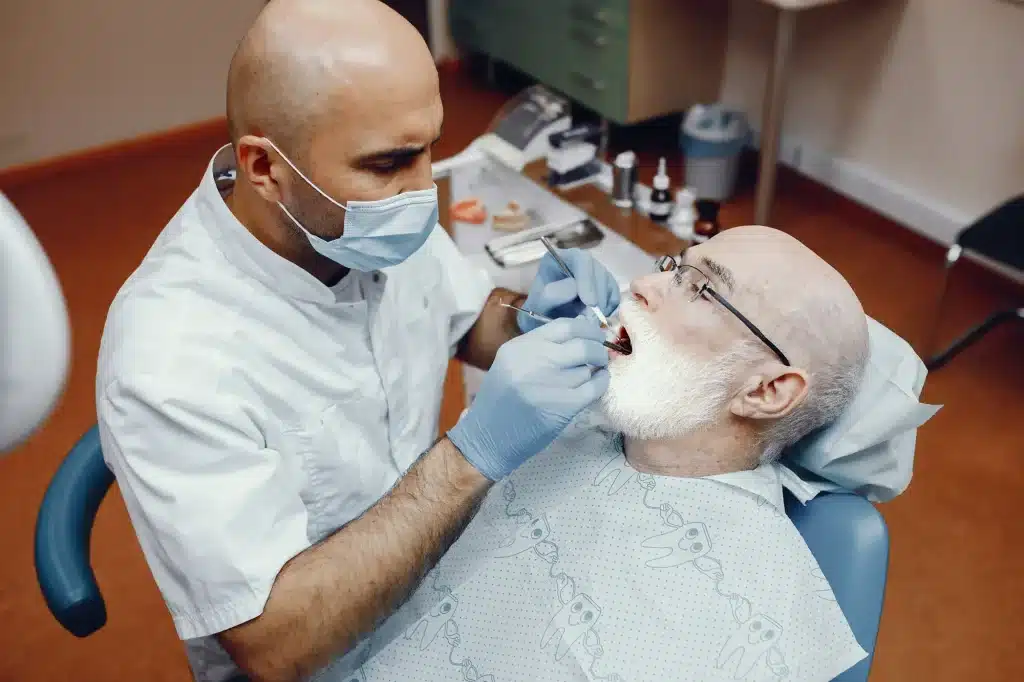
The cost of a simple tooth extraction in Mexico ranges from $60 to $80. The quality variance between clinics in Mexico is significant, with no functional equivalent of the US state dental board system, where complaints are publicly searchable and disciplinary history follows a provider.
Getting dental work done in Mexico is not unusual for US patients. As the CDC’s Yellow Book on Medical Tourism notes, dental care is the single most common form of medical tourism among US residents — driven largely by the cost of dental care in the United States and the proportion of Americans without adequate dental coverage. Border cities like Los Algodones (Baja California) and Tijuana are the primary destinations, with millions of Americans making the crossing each year.
The price difference is real and significant. What the glossy dental tourism marketing rarely covers: the quality variance between clinics is equally real. Mexico has no functional equivalent of the US state dental board system, where complaints are publicly searchable and disciplinary history follows a provider. Regulatory oversight of dental facilities falls under COFEPRIS (Comisión Federal para la Protección contra Riesgos Sanitarios), Mexico’s federal health regulator. Clinics are required to file an Aviso de Funcionamiento (operating notice) with COFEPRIS before opening. Verifying a dentist’s individual credentials requires using Mexico’s federal licensing database — and most US patients don’t know it exists.
This guide is written for patients who are seriously considering extractions and dentures in Mexico and want to make a genuinely informed decision: costs, clinical realities, regulatory context, and the things that go wrong.
What the Costs Actually Look Like
The cost of a simple tooth extraction in Mexico ranges from $60 to $80, compared to $150 to $300 in the United States. Similarly, complete dentures per arch in Mexico range from $250 to $600, whereas in the United States, the cost can be as high as $1,000 to $3,000.
The table below reflects price ranges reported by clinics in the US–Mexico dental corridor. All figures should be verified directly with your chosen clinic before booking. Prices vary by city, clinic tier, materials used, and complexity of your case.
| Procedure | Mexico (Reported Range) | US Average Range | Notes |
|---|---|---|---|
| Simple tooth extraction | $30–$80 | $75–$300, avg ~$177 | Fully erupted, accessible tooth |
| Surgical extraction | $120–$250 | $150–$650, avg ~$363 | Impacted or broken tooth |
| Full-mouth extraction | $600–$1,200 | $1,500–$3,000 | All teeth, upper or lower |
| Complete dentures (per arch) | $250–$700 | $1,000–$3,500 | Material quality varies widely |
| Partial dentures | $300–$800 | $700–$2,500 | Depends on number of teeth |
| Immediate dentures | $400–$900 | $1,500–$4,000 | Placed same day as extraction |
| Implant-supported dentures | $3,000–$8,000 | $8,000–$20,000 | Multi-stage; requires months |
US figures sourced from CareCredit cost data via Becker’s Dental and NewMouth’s 2026 denture cost analysis. Mexico ranges drawn from publicly listed clinic pricing as of May 2026; exact costs require direct inquiry with your specific clinic.
One thing most comparison articles skip: the cost of denture-quality materials varies considerably. A $300 acrylic denture and a $700 flexible nylon partial are not the same product. Ask the clinic specifically what material is included in the quoted price. This matters clinically — acrylic dentures typically have a shorter functional lifespan and may require replacement within 5–7 years, while poor-quality acrylic can fracture sooner. Peer-reviewed data on removable denture complication rates consistently identify loss of retention and poor fit as the leading reasons for early denture replacement.
The Mexican Border Dental Cities: What’s Different About Each
Los Algodones (Baja California)
Often called “Molar City,” Los Algodones is a small border town with a high concentration of dental clinics — over 300 by the most conservative recent estimates, many sources citing 350 or more. It sits just across the Arizona border near Yuma. There is no vehicle access on the Mexican side; patients park on the US side and walk across. The Los Algodones port of entry is open from 6:00 am to 10:00 pm, seven days a week.
The concentration of clinics keeps prices down through competition. It also means quality variance is significant — research individual clinics, not just the town’s reputation.
Tijuana (Baja California)
Larger city, more established clinics, more dentists with US or Canadian training credentials. Accessible from San Diego by car or trolley. Higher-end clinics here tend to quote prices closer to the upper end of the ranges above.
Cancún (Quintana Roo)
Not a border crossing — requires a flight from most US cities. Costs are often higher than border-city clinics. Useful primarily if a patient is combining dental work with a longer stay or vacation.
Checking Credentials the Right Way
Every licensed dentist in Mexico holds a Cédula Profesional — a federal license number issued by Mexico’s Secretaría de Educación Pública (SEP). Patients can verify this at Mexico’s Cédula Profesional online registry, maintained by the federal government. Enter the dentist’s full legal name or license number to confirm their credentials.
Under NOM-016-SSA3-2012 — the Mexican health regulation governing dental clinics — providers are required to visibly display the treating dentist’s title, license (cédula), and diplomas. A legitimate clinic will provide cédula numbers in writing without hesitation. If they won’t, that’s a red flag.
Note that a cédula confirms the dentist completed university-level dental training. It does not verify specialty certification (prosthodontics, oral surgery, etc.). Specialty credentials are issued by separate bodies — ask specifically which board, if any, certified the specialist treating you.
The Procedure: What the Timeline Looks Like
Dental Extractions
A simple extraction is typically completed in a single appointment. Surgical extractions — for impacted teeth, broken roots, or wisdom teeth — may require a follow-up for suture removal 5–7 days later.
What the procedure involves:
- Clinical exam and X-rays (panoramic X-ray typically included at most Mexican clinics)
- Local anesthesia (lidocaine is standard; verify if you have allergies)
- Extraction, with or without sectioning the tooth
- Post-extraction instructions: diet restrictions, gauze protocol, signs of dry socket
Dry socket (alveolar osteitis) is the most common post-extraction complication. According to peer-reviewed research published in PMC, the incidence ranges from 1% to 5% for routine extractions and climbs significantly for mandibular third molar extractions — as high as 30% in some surgical cases. Smoking is a particularly significant risk factor. If dry socket develops after you’ve returned to the US, you’ll need to treat it with a US dentist. Have a follow-up plan before you travel.
Dentures: Realistic Timeline
| Stage | Typical Timeframe |
|---|---|
| Initial exam, X-rays, impressions | Day 1 |
| Lab fabrication | Days 2–6 (5–7 business days) |
| Try-in appointment | Day 7 |
| Adjustments and final delivery | Day 8–10 |
| Total stay required | 7–12 days for standard dentures |
Immediate dentures (placed the same day as extractions) shorten the in-Mexico stay but require follow-up adjustments. Your gums change shape significantly as they heal post-extraction. Most patients need relining within 6–12 months — this will typically need to be done by a US dentist unless you return to Mexico.
Implant-supported dentures are a multi-stage process. Implant placement requires a healing period of 3–6 months before the final prosthetic is attached. Expect two separate trips to Mexico months apart, or a single extended stay.
Risks You Should Understand Before Booking
Clinical Complications
Dry socket: Common after extractions, especially in smokers and patients with poor oral hygiene. Requires follow-up treatment. The CDC’s Yellow Book on Medical Tourism specifically notes that dental tourists face risks of infection from procedures abroad, and post-procedure complications requiring follow-up care at home are a known pattern across medical tourism generally.
Infection: Post-extraction infection can develop after you’ve returned home. Know the signs: increasing pain after day 3, fever, swelling that worsens rather than improves. Have a US dentist identified before you leave.
Ill-fitting dentures: The most common long-term complaint from patients who got dentures abroad. Poor fit causes pressure sores, difficulty eating, and accelerated bone resorption beneath the denture. Research on complication rates in removable denture patients identifies loss of retention and misfitting as the primary complaints driving dissatisfaction and early replacement.
Bone resorption: Ongoing bone loss under a denture is a documented, progressive biological process. As the same peer-reviewed literature on residual ridge resorption notes, even well-fitting dentures become loose over time as the underlying bone continues to resorb. Dentures typically require relining every 2–3 years and replacement every 7–10 years. This means the clinical relationship does not end at delivery.
Regulatory and Clinic Risks
No publicly searchable complaint database: Unlike US state dental boards, COFEPRIS complaint records are not easily accessible to foreign patients.
Limited legal recourse: The US State Department’s Mexico travel advisory states directly that legal options in cases of malpractice are very limited in Mexico. The advisory notes PROFECO (Mexico’s consumer protection agency) as a possible avenue for disputes. Mexico’s national medical arbitration commission, CONAMED, offers free orientation services for patients with complaints.
Lab quality is invisible to the patient: The denture lab used by the clinic may be on-site, local, or offshore. Ask specifically where the lab is and what certifications it holds.
When You Should Not Travel for Dental Work
- Active systemic infection anywhere in your body
- Uncontrolled diabetes (impairs healing significantly)
- Current anticoagulant therapy without physician clearance for dental procedures
- Severe heart conditions requiring antibiotic prophylaxis before dental work — verify the clinic’s protocol specifically
- Inability to return to Mexico or access a US dentist if complications require follow-up
Questions to Ask Before Booking
- What is the treating dentist’s Cédula Profesional number? Ask for it in writing and verify it at the SEP professional registry.
- Does the clinic have an Aviso de Funcionamiento filed with COFEPRIS? Ask for documentation.
- Does the clinic hold accreditation from JCI, Temos, GHA, or a recognized Mexican body? Ask for the certificate number and expiration date, not just a yes/no.
- Where is the dental laboratory that will fabricate my dentures? Is it in-house or outsourced? What QA standards does it follow?
- What specific denture material is included in the quoted price? Acrylic, flexible nylon, porcelain teeth vs. composite — each differs in durability and cost.
- What is the written protocol if I develop dry socket or an infection after I return to the US? Do they have a US-based contact or partner clinic?
- Is a panoramic X-ray included, or is it an additional fee? What equipment does the clinic use?
- What is your written refund or redo policy if the dentures don’t fit correctly after I’ve returned home?
- Will you provide a written treatment plan with itemized costs before any procedure begins? A clinic that won’t do this in writing is a red flag.
- Do you carry professional liability insurance? Ask for documentation.
- What is the realistic number of appointments required, and what’s the minimum stay? Get this in writing before booking flights.
- Will my denture require relining after my gums heal? Who handles that — do I return to Mexico, or can it be done by my US dentist?
Clinics Referenced in This Article
Important: UMT does not endorse specific clinics. Verify all credentials independently before booking.
Sani Dental Group — Multiple locations in Los Algodones and Cancún. Founded in 1985 by D.D.S. Enrique Jimenez. Accreditation as of the time of this writing includes: ADA membership, MTA (Medical Tourism Association) International Patient Services Certification, BBB accreditation, and the Mexican Government’s Health Tourism Stamp. Note: No JCI or Temos accreditation was found in publicly available sources. Verify current accreditation status directly with the clinic. Request current certificate numbers and expiration dates.
What Universal Medical Travel Does — and Doesn’t Do
UMT connects US patients with international dental clinics and helps coordinate the logistics of a medical travel trip: clinic referrals, appointment scheduling assistance, and patient support during the planning process.
UMT does not provide dental treatment, employ dentists, or guarantee clinical outcomes. The CDC’s Yellow Book notes that dental providers abroad may not be subject to the same licensure oversight as their US counterparts — a reminder that independent credential verification matters regardless of how a patient found the clinic. The due diligence questions listed above are things patients must ask and verify themselves. UMT can help facilitate the conversation, but cannot do it for you.
FAQ
Q: Is it legal for US citizens to get dental work done in Mexico? A: Yes. Per the US State Department’s Mexico country page, US citizens do not require a visa for visits under 180 days. Dentures and other dental prosthetics brought back for your own personal use are not prohibited items at the US border. For the most current CBP guidance on declaring goods upon reentry, consult CBP’s official traveler resources before your trip, as regulations can change.
Q: What happens if something goes wrong after I return to the US? A: You will need to see a US dentist. Complications like dry socket, infection, or a poorly fitting denture cannot wait for a return trip to Mexico. Before you travel, identify a US dentist who is willing to provide follow-up care for work done abroad. Some US dentists decline to do this — ask before you go.
Q: How do I verify that a Mexican dentist is legitimately licensed? A: Request the dentist’s Cédula Profesional number and verify it at Mexico’s SEP professional credentials database. This is the federal license number all Mexican dentists must hold. Specialty certifications (prosthodontics, oral surgery) are issued by separate boards — ask which specialty council, if any, issued the specialist’s certification.
Q: Can I get extractions and dentures done in one trip? A: For standard complete dentures, yes — typically in 7–12 days. For implant-supported dentures, no. Implants require 3–6 months of osseointegration before the final prosthetic can be placed. This means two separate trips.
Q: Are Mexican dental clinics required to give me informed consent documents? A: Under COFEPRIS regulations and Mexico’s NOM-016-SSA3-2012, clinics providing health services have legally mandated patient protections including requirements for proper documentation and clinical records. If a clinic does not provide written informed consent before beginning treatment, do not proceed.
Q: What’s the catch with “immediate dentures”? A: They’re placed the same day as extractions. The issue: your gums and underlying bone remodel significantly after extractions. An immediate denture fit to pre-extraction anatomy will almost certainly need relining within 6–12 months. Factor in who handles that and what it costs.
Q: Is the 70% savings figure real? A: The cost differential between US and Mexican dental prices is real and documented. Whether any individual patient saves that much depends on procedure complexity, materials chosen, number of required appointments, travel costs, and whether complications require US follow-up. Calculate your total expected cost including flights and accommodation before treating any headline savings figure as a decision anchor.
Important: This article provides general information about dental extractions and denture placement in Mexico and is not medical advice. These procedures carry specific risks, including infection, dry socket, nerve injury, and ill-fitting prosthetics that require follow-up treatment. International medical travel adds additional risks. Regulatory oversight and quality of care vary by clinic. Consult a licensed dentist who has reviewed your complete dental and medical history before traveling abroad for treatment. Prices, clinic offerings, and regulations change frequently — verify all specifics directly with clinics before committing. Universal Medical Travel is a medical travel facilitator and does not provide medical services, employ dentists, or guarantee clinical outcomes.
Sources Cited
- CDC Yellow Book 2026 — Medical Tourism — Centers for Disease Control and Prevention
- COFEPRIS — Comisión Federal para la Protección contra Riesgos Sanitarios — Mexico’s federal health regulator
- SEP Cédula Profesional Registry — Mexico’s official professional licensing database (Secretaría de Educación Pública)
- Average Costs of Dental Procedures 2024 — CareCredit data via Becker’s Dental — Includes simple extraction ($177 avg) and surgical extraction ($363 avg)
- How Much Do Dentures Cost — NewMouth 2026 — US denture cost ranges by tier
- Prevalence and Factors Associated with Dry Socket — PMC11175567 — Peer-reviewed; confirms 1–5% incidence for routine extractions
- Dry Socket Prevalence and Risk Factors — PMC11032735 — Peer-reviewed; confirms up to 30% in surgically extracted third molars
- Complication Rates and Patient Satisfaction with Removable Dentures — PMC3381202 — Peer-reviewed; covers bone resorption, ill-fitting dentures, and loss of retention
- US State Department Mexico Travel Advisory — Confirms no visa required under 180 days; notes limited malpractice recourse
- US Customs and Border Protection — CBP.gov — For current reentry and declaration requirements
Your Health Journey Starts Here – Connect with Our Consultants Today!
Please submit the patient form to qualify for the Discount Code or any promotions that are available. If you contact the clinic directly before submitting the form, you will receive the standard prices.
Patient Information Form (Discount Code: UMT 5%)Want to see more of our medical travel guides in Google Search?