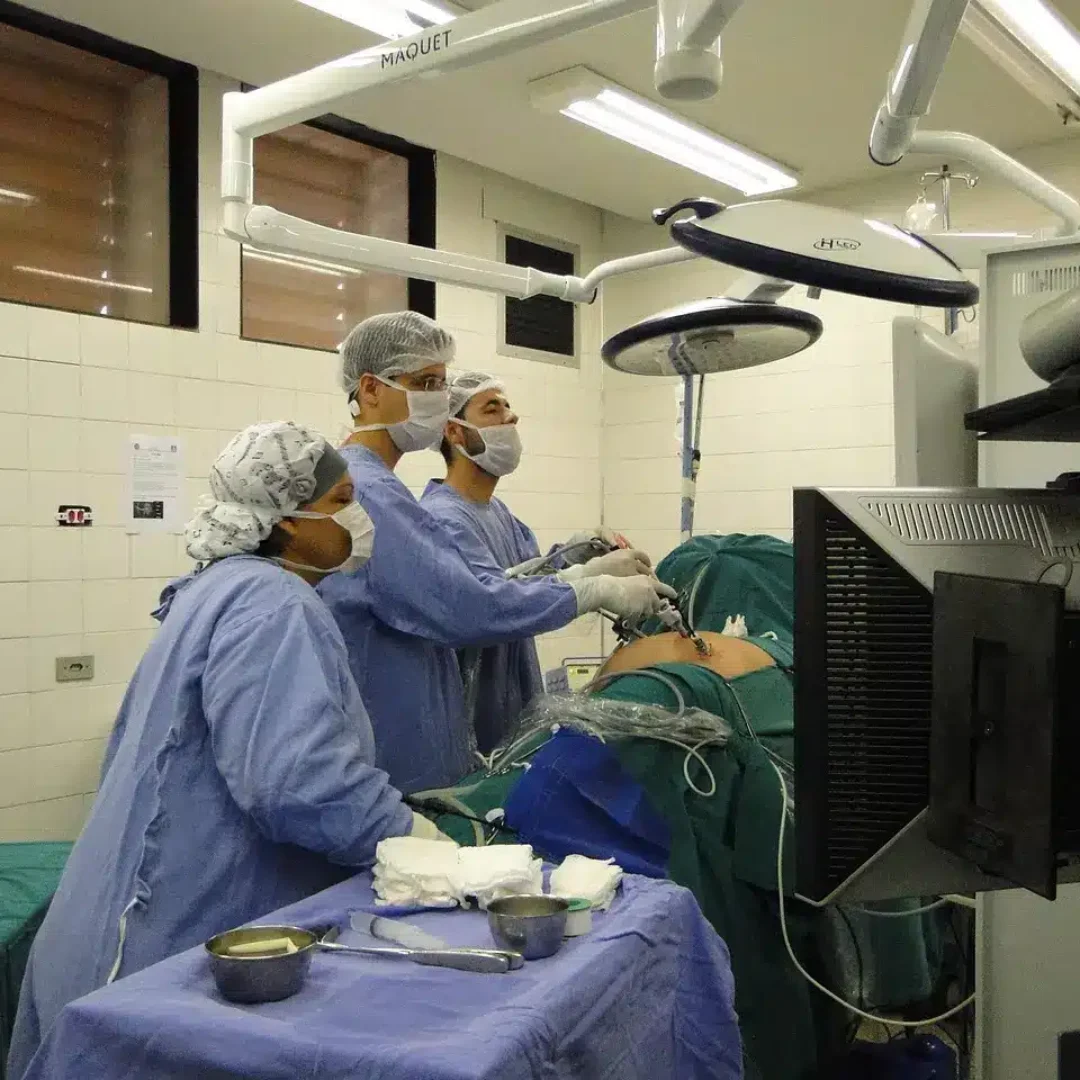

The cost of penile implant surgery in Mexico typically ranges from $7,000 to $12,000, depending on the type of implant, surgeon's expertise, and clinic location. In Mexico, the regulatory body overseeing medical devices is COFEPRIS, which is responsible for ensuring the safety and quality of medical devices used in the country.
Penile implant surgery (formally: penile prosthesis implantation) is a well-established urological procedure with decades of published outcome data. It is not experimental. The American Urological Association includes penile prosthesis implantation in its clinical guidelines for erectile dysfunction that does not respond to medication or injection therapy — categorizing it as a strong recommendation with a Grade C evidence level.
What is less clear — and what most medical travel articles avoid addressing — is whether the implant device used at a clinic in Tijuana or Guadalajara is the identical FDA-cleared product available in the US, or a regional variant. That distinction matters if you return home with a malfunction or complication and need a US urologist to service or revise the device.
This article covers realistic costs, how Mexico’s regulatory system applies to this procedure, device brand verification, and the specific questions you need answered before booking. It does not name clinics unless those clinics have been directly verified by UMT through current patient inquiries and documentation review. Placeholder tags mark every claim you or UMT must confirm before this information is acted upon.
This article is not a recommendation to pursue penile implant surgery in Mexico. That decision belongs to you and a licensed urologist who has reviewed your complete medical history.
What the Cost Data Actually Shows
The cost of penile implant surgery in Mexico typically ranges from $7,000 to $12,000, depending on the type of implant (inflatable or malleable), surgeon’s expertise, and clinic location. In contrast, the same procedure in the U.S. can cost between $18,000 and $30,000.
Mexico vs. US Pricing
Reported costs for penile implant surgery in Mexico range from approximately $7,000 to $12,000 depending on implant type, clinic location, and what the package includes. In the US, the same procedure — including surgeon fee, hospital facility fee, anesthesia, and device — typically ranges from $18,000 to $30,000 for patients without insurance coverage. Published estimates for uninsured patients place the US range between $10,000 and $35,000, with bundled package pricing from high-volume centers generally between $16,000 and $19,000.
The gap exists for predictable reasons: lower physician labor costs, lower facility overhead, and a malpractice insurance environment that is not comparable to the US. That lower cost is real. It does not mean lower quality in every case, but it also does not automatically mean equivalent quality. The two things are unrelated.
What “All-Inclusive” Usually Means
Many clinics market “all-inclusive packages.” Before accepting that phrase, confirm in writing what is actually included. Packages vary significantly.
| Line Item | Often Included | Sometimes Not Included |
|---|---|---|
| Surgeon fee | ✓ | — |
| Anesthesiologist fee | ✓ | — |
| Operating room and facility | ✓ | — |
| Implant device (AMS or Coloplast) | Usually | Occasionally billed separately |
| One-night post-op hospital stay | Usually | — |
| Pre-op labs and EKG | Sometimes | Often extra |
| Follow-up consultation (in clinic) | Sometimes | Often extra |
| Post-discharge medications | Rarely | Typically extra |
| Airport transfer | Sometimes | — |
| Accommodation | Rarely | Typically extra |
Inflatable vs. malleable pricing: Three-piece inflatable implants (AMS 700 series, Coloplast Titan) cost more than malleable (semi-rigid) devices because the device itself is more expensive and the surgery is more technically complex. A malleable implant procedure may quote as low as $7,000; a three-piece inflatable in a well-credentialed facility is more likely to quote $9,500–$12,000.
One counterintuitive point most articles skip: the device cost — the implant hardware itself — is not dramatically cheaper in Mexico for brand-name US devices, because AMS (owned by Boston Scientific) and Coloplast set international pricing structures. The main savings come from surgeon and facility fees. If a clinic quotes you a strikingly low total that doesn’t account for the device cost, ask specifically how much the device itself is billed at.
Mexico-Specific Details: Regulatory, Accreditation, and Logistics
The Regulatory Body Is COFEPRIS — Not “Health Authorities”
Mexico’s medical device regulatory agency is COFEPRIS (Comisión Federal para la Protección contra Riesgos Sanitarios), which operates under the Secretaría de Salud. COFEPRIS registers medical devices for legal sale in Mexico, including penile implant systems. The official device registration documentation is maintained at COFEPRIS’s device registration page. COFEPRIS also recognizes equivalency with FDA approval for certain device classes, which means FDA-cleared devices can obtain Mexican registration through an expedited pathway — but registration must still be confirmed.
Before surgery, confirm with the clinic in writing that the specific implant they plan to use carries current COFEPRIS registration. Also ask whether it is the identical product sold in the US under FDA clearance, or a version manufactured or configured differently for Latin American markets.
Physician Credentialing in Mexico
Mexican urologists are licensed through the Secretaría de Educación Pública (SEP) and may hold board certification through CONACEM (Consejo Nacional de Certificación en Cirugía) or the Consejo Mexicano de Urología. Subspecialty certification in andrology or prosthetic urology is the relevant credential for this procedure.
Ask for the surgeon’s cédula profesional number — a unique identifier issued by the SEP and publicly verifiable through the BUHOLAP online registry. A legitimate Mexican physician will provide this without hesitation.
“International training” and “fellowship at US institutions” are phrases used in clinic marketing that require specific verification. Ask: at which institution, in what year, under which program? Many of these claims are accurate. Some are not.
Hospital Accreditation — What the Bodies Actually Mean
| Accreditation | Issuing Body | What It Covers |
|---|---|---|
| JCI (Joint Commission International) | Joint Commission International (US-based) | Broad hospital safety, quality management |
| Temos | Temos International Healthcare Accreditation (Germany) | Specifically for medical travel facilities |
| ISO 9001 | International Organization for Standardization | Quality management systems — not clinical quality |
| CSMS (Consejo de Salubridad General) | Mexican federal government | Mexico’s domestic hospital certification |
JCI accreditation is the most recognized internationally and covers clinical quality directly. Not all good clinics in Mexico are JCI-accredited — accreditation is expensive and many high-performing independent clinics don’t pursue it. But if a clinic claims JCI accreditation, verify it directly on the JCI accredited organizations directory. Accreditation can lapse; the directory reflects current status.
Geographic Considerations
Tijuana is the most common destination for US patients due to proximity to San Diego. Medical corridors along Revolution Avenue and in the Zona Río area host several urology-focused clinics. English is widely spoken among medical staff serving US patients in this corridor. Travel from San Diego by car takes under 30 minutes at off-peak hours.
Guadalajara has a more established domestic private hospital sector and is home to several larger multi-specialty hospitals. It is further from the US border and requires a flight, adding logistical complexity but offering a larger pool of subspecialty-trained urologists.
Mexico City offers the highest concentration of academic medical infrastructure. Hospital Angeles, Hospital Médica Sur, and several private urology institutes operate there. Cost is generally comparable to Guadalajara rather than Tijuana.
Visa: US citizens do not require a visa to enter Mexico for medical travel purposes for stays up to 180 days. A valid US passport book is required for air travel (passport cards are valid for land crossings only). Confirm current documentation requirements before booking, as requirements can change.
Language: English fluency among surgeons and coordinators varies. Ask specifically whether your surgeon conducts consultations in English, or whether an interpreter is used. Interpreter-mediated surgical consultations introduce communication risk. If you are not fluent in Spanish, this is a patient safety issue, not a preference.
How Long Should You Plan to Stay?
Most urologists recommend a minimum 5–7 days post-surgery before flying home. The primary reasons: catheter management in the first 24 hours, wound inspection before discharge, and monitoring for early infection signs. Blood clot risk on flights is also relevant for any surgical patient. Discuss specific stay duration with your consulting surgeon, not with the clinic’s booking coordinator.
Risks, Complications, and When to Walk Away
Documented Complications in the Literature
Penile prosthesis implantation is the most invasive permanent treatment for ED. According to a 2020 systematic review in Sexual Medicine Reviews, infection rates across published series ranged widely, with the most frequently reported rate for inflatable devices at 5% or below; with modern antibiotic-coated devices, the AUA guideline reports most series now show 1–2% infection rates. Research specifically on diabetic patients has shown that antibiotic-impregnated devices significantly reduce infection-related revision risk in this higher-risk group. Infection requiring explantation is the most serious complication — it typically results in device removal, a healing period of 3–6 months, and more complex revision surgery.
Other documented risks include:
- Mechanical failure requiring revision. A long-term outcomes review estimated 5-year overall survival of modern prosthetics at approximately 90%, with 10-year survival around 87%. A multicenter revision surgery study found overall device survival of 96% at 5 years, declining to 60% at 15 years.
- Erosion of the cylinder through urethral or penile tissue
- Autoinflation (the device inflating unintentionally)
- Scrotal hematoma
- Post-surgical pain
The 10–15 year lifespan commonly cited for modern inflatable implants reflects manufacturer-reported data under controlled conditions. Real-world revision rates vary. Ask your surgeon specifically about the revision rate in their own patient panel, not generic published averages.
Red Flags That Should Stop a Booking
- The clinic cannot provide the surgeon’s cédula profesional number
- The quote does not specify the device brand and model by name
- Informed consent documents are provided only in Spanish to a non-Spanish-speaking patient, with no translation offered
- The clinic cannot confirm whether the device carries current COFEPRIS registration
- No follow-up plan is offered for complications that arise after you return home
- The clinic discourages you from seeking a US-based urology consultation before surgery
- Payment is required entirely in cash with no written contract
Who Should Not Travel for This Procedure
Patients with active urinary tract or perineal infections. Patients with poorly controlled diabetes — the AUA guideline explicitly states that penile prosthetic surgery should not be performed in the presence of systemic, cutaneous, or urinary tract infection. Patients who have had prior penile surgery or radiation, which significantly complicates implantation and elevates complication risk. Patients without a US-based urologist willing to manage post-operative care if complications arise after return. If your US urologist will not commit to managing complications from a Mexico-performed implant, that is medically significant information.
Questions to Ask Before Booking — Specific, Not Generic
- “What is your surgeon’s cédula profesional number, and which state registry issued it?” Request this in writing, then verify it independently on the BUHOLAP registry.
- “Is the surgeon certified by the Consejo Mexicano de Urología or CONACEM? What is their certification number and current renewal date?”
- “Which exact device brand and model will be used — AMS 700 LGX, AMS 700 CX, Coloplast Titan, or another?” Do not accept “an FDA-approved device” as an answer. Get the model number.
- “Does the device carry current COFEPRIS registration, and can you provide the registration number?”
- “Is the device the same product sold in the US under FDA clearance, or is it a regional configuration?” Ask specifically whether the warranty is honored in the US if the device fails after you return home. Both the AMS 700 series and Coloplast Titan are Class III devices cleared by the FDA for use in the US.
- “What is your personal infection rate for primary penile prosthesis implantation over the last 3 years?” Published data is not your surgeon’s data. A surgeon uncomfortable with this question is a data point.
- “What is your protocol if I develop a fever, swelling, or purulent discharge within two weeks of returning home?” Is there a direct line to the surgeon? Do they coordinate with a US urologist?
- “What signed informed consent documentation will I receive, and will it be provided in English?”
- “Who holds malpractice or professional liability coverage for this procedure, and in which jurisdiction does it apply?”
- “If the device fails mechanically within the first year, who is responsible for revision surgery costs?”
- “Can you provide contact information for two or three former patients who had the same procedure and have consented to being references?” Clinics serving international patients often have these. No list is a red flag.
- “What pre-operative testing will be required, and is it included in the quoted price?” At minimum, expect CBC, metabolic panel, urinalysis, and EKG for patients over 50.
- “What is your cancellation and refund policy if I am deemed medically unsuitable after arriving?”
What Universal Medical Travel Provides
Universal Medical Travel connects US patients with international clinics and coordinates logistics. Specifically, UMT facilitates initial contact with clinics, helps patients compile questions for surgeon consultations, and in some cases has established relationships with facilities where staff credentials and accreditation status have been reviewed.
UMT does not perform medical evaluations. UMT does not verify surgeon outcomes data. UMT cannot guarantee clinical quality, device authenticity, or complication rates at partner or non-partner facilities.
The responsibility for verifying surgeon credentials, device registration, and informed consent documents rests with the patient and, if engaged, with the patient’s US-based physician. UMT is a facilitator, not a medical provider, and no statement on this site constitutes medical advice.
Patients who use UMT’s 5% discount code receive the same clinical care as direct-booking patients — UMT’s relationship with facilities does not alter the surgical team or protocols.
Frequently Asked Questions
Q: Is penile implant surgery in Mexico safe? Safety depends on surgeon skill, facility standards, device quality, and your specific health status — not on geography. Mexico has both high-performing urological practices and low-quality ones. The vetting steps in this article exist because there is genuine variation. “Mexico” is not a quality signal in either direction.
Q: Will my US urologist manage post-op complications from a Mexico surgery? Some will. Many will not, either due to liability concerns or unfamiliarity with the specific device used. Confirm this explicitly with your US urologist before booking. This is the single most important logistical question for medical travelers having permanent implant surgery.
Q: Can I use my US health insurance for this procedure? Likely no. US health insurance plans generally do not cover elective surgery performed outside the US. Some plans cover emergency care abroad. Confirm with your insurer before traveling. Medical financing options are available through UMT’s financing partners — see the Financing page.
Q: What happens if the device fails mechanically after I’m home? If the device is an identical FDA-cleared AMS or Coloplast product, a US urologist with prosthetic urology training can perform revision surgery. The manufacturer’s warranty may apply — but only if the device is a US-market-cleared product. If it is a regional variant, the warranty situation is unclear. This is why confirming device identity before surgery matters.
Q: How do I verify a Mexican clinic’s JCI accreditation claim? Go directly to the JCI accredited organizations directory and search by facility name and country. Do not rely on a logo on the clinic’s website. Accreditation can lapse; the JCI directory reflects current status.
Q: Is Tijuana or Guadalajara a better choice for this procedure? Neither is categorically better. Tijuana offers US proximity and strong English-language access. Guadalajara offers a larger academic medical ecosystem. The surgeon’s individual credentials and experience matter more than the city.
Q: What is the difference between a 2-piece and 3-piece inflatable implant? A 2-piece inflatable (e.g., AMS Ambicor) has cylinders and a pump-reservoir unit combined — simpler surgery, slightly less natural erection control. A 3-piece inflatable (e.g., AMS 700, Coloplast Titan) separates the reservoir into the abdomen, allowing fuller flaccidity and rigidity. The 3-piece is more technically demanding to implant and revise. Which is appropriate for you is a clinical decision your urologist should make based on anatomy and prior surgeries.
Important: This article provides general information about penile prosthesis implantation and is not medical advice. Penile prosthesis surgery carries specific surgical risks and is a permanent, irreversible intervention not appropriate for all patients with erectile dysfunction. Consult a licensed urologist who has reviewed your complete medical history before making any surgical decision or traveling abroad for treatment. Prices, clinic offerings, and regulations change frequently — verify all specifics directly with clinics before committing. Universal Medical Travel is a medical travel facilitator and does not provide medical services.
Sources Cited
- Burnett AL, Nehra A, Breau RH, et al. Erectile Dysfunction: AUA Guideline. J Urol. 2018;200(3):633–641. https://www.auajournals.org/doi/10.1016/j.juro.2018.05.004
- Urology Care Foundation (AUA). Erectile Dysfunction — Patient Information. https://www.urologyhealth.org/urology-a-z/e/erectile-dysfunction-(ed)
- Mahon J, Dombier R, Wegrzyn G, et al. Infectious Adverse Events Following the Placement of a Penile Prosthesis: A Systematic Review. Sex Med Rev. 2020;8:348–354. https://pubmed.ncbi.nlm.nih.gov/31519461/
- Mulcahy JJ et al. Long-term infection rates in diabetic patients implanted with antibiotic-impregnated versus nonimpregnated inflatable penile prostheses: 7-year outcomes. Eur Urol. 2011;60(1):167–172. https://pubmed.ncbi.nlm.nih.gov/21316145/
- Trost LW, McCaslin R, Linder B, Hellstrom WJ. An update on: long-term outcomes of penile prostheses for the treatment of erectile dysfunction. J Sex Med. 2019. https://pubmed.ncbi.nlm.nih.gov/30898042/
- Henry GD et al. An outcomes analysis of over 200 revision surgeries for penile prosthesis implantation: a multicenter study. J Sex Med. 2012;9:309–315. https://pubmed.ncbi.nlm.nih.gov/22082149/
- COFEPRIS — Comisión Federal para la Protección contra Riesgos Sanitarios. https://www.gob.mx/cofepris
- COFEPRIS — Listados de Registros de Dispositivos Médicos. https://www.gob.mx/cofepris/documentos/registros-dispositivos-medicos
- FDA — 510(k) Premarket Notification Database (CDRH). https://www.accessdata.fda.gov/scripts/cdrh/cfdocs/cfpmn/pmn.cfm
- Joint Commission International — Accredited Organizations Directory. https://www.jointcommissioninternational.org/accreditation/accreditation-and-certification/accredited-organizations/
- Temos International Healthcare Accreditation. https://www.temos-worldwide.com/
- US State Department — Mexico Travel Advisory. https://travel.state.gov/en/international-travel/travel-advisories/mexico.html
- Ro.co — Erectile Dysfunction Surgery Cost (2026). https://ro.co/erectile-dysfunction/erectile-dysfunction-surgery-cost/
Your Health Journey Starts Here – Connect with Our Consultants Today!
Please submit the patient form to qualify for the Discount Code or any promotions that are available. If you contact the clinic directly before submitting the form, you will receive the standard prices.
Patient Information Form (Discount Code: UMT 5%)Want to see more of our medical travel guides in Google Search?